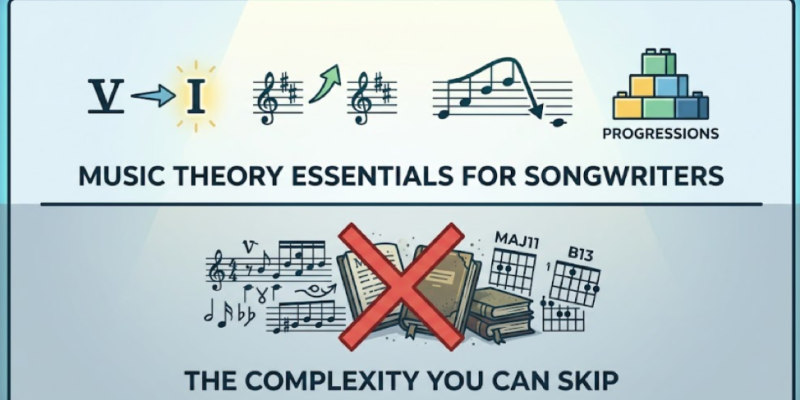
Most songwriters fall into one of two camps. Camp one avoids theory entirely. "I just write what sounds good," which works fine until you hit a wall you can't write your way around. Camp two feels guilty for not knowing it, picturing years of scales and ear-training drills standing between them and being a "real" musician.
Both camps are wrong about the same thing: they think theory is all-or-nothing. It isn't. A small, specific set of concepts covers most of what actually shows up in songwriting. Everything past that is optional, useful mainly if you're going into film scoring or jazz arranging. Here's what's actually worth your time.
You've had the experience of writing a progression that feels like it was always going to end there and one that feels random even though the notes are "correct." That's not an instinct you either have or don't. It's tension and resolution, and it's learnable in an afternoon. Once you understand why the five chord wants to pull back to the one, you stop stumbling into that feeling by accident and start building it on purpose.
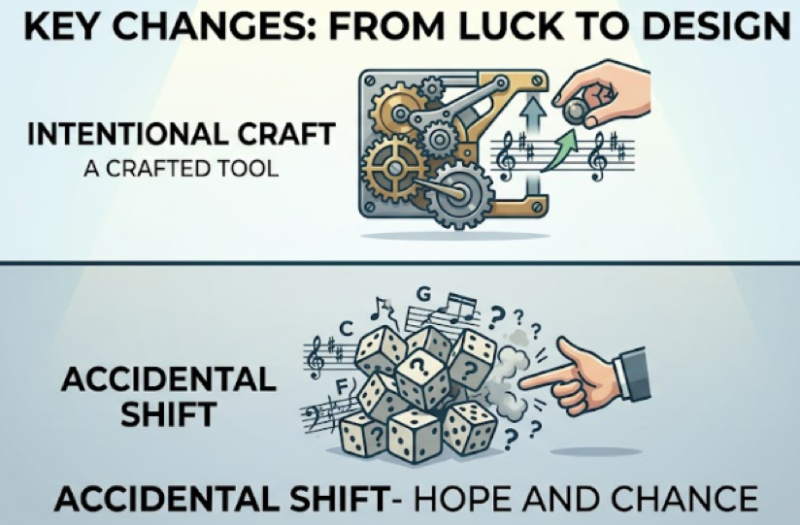
Every songwriter has felt a key change lift a song right before the last chorus. Most have no idea why it works, which means they can't do it deliberately, they can only hope for it. Modulation is a handful of specific techniques, not a mystery. Learn two or three of them and you have a tool instead of a lucky accident.
This one trips up new songwriters constantly. A melody that wanders and never lands anywhere specific reads as unfinished, even when every note is technically fine. The fix isn't talent; it's understanding which notes in a scale create rest and which create pull, basic voice leading, one concept, immediately useful.
Modal interchange, extended jazz voicings, four-part counterpoint. All real, all interesting, none of it required to write a song people feel. If you end up producing or arranging for other artists down the line, revisit it. Until then, it's a rabbit hole, not a requirement.
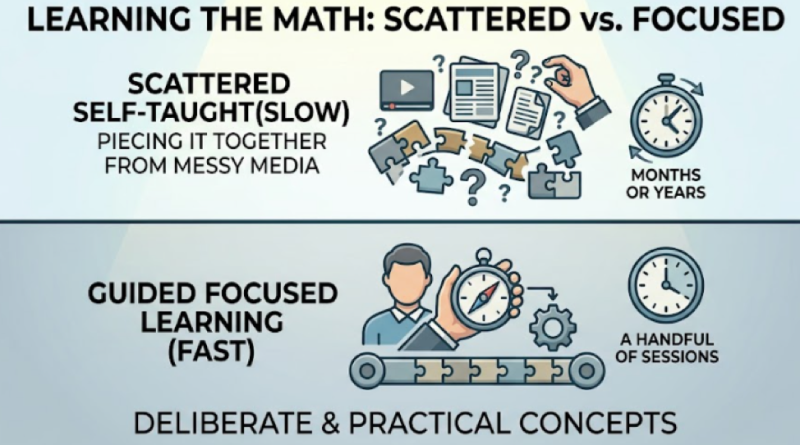
You can absolutely piece this together from articles and videos, the same way most self-taught musicians do. It'll take longer, though, and the gaps are hard to spot on your own — you don't know what you don't know until someone points it out. A teacher who can hear what you're going for and show you the specific concept behind it will get you there in a handful of sessions instead of months of scattered searching. Places like Foundations Music Academy work with songwriters for exactly this, not full classical theory, just the practical pieces that make your writing more deliberate.
You don't need to become a theory nerd to write great songs. You need the four or five ideas that explain why the songs you already love work the way they do. Learn those, and the guesswork mostly disappears.

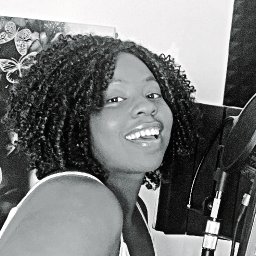
As a session singer, writer, and producer that has worked with over 300 clients to provide high-quality jingles, singles, and features, Yona spends her time creating and marketing new music and helpful resources for creators. Check out Yona’s latest releases on her Spotify, her Youtube and share if you like it!
If you are in need of singer, songwriter or song producer services, see what Yona Marie can offer you on her services page.